Art Therapy Guelph ON | Creative Counselling
Some of what people carry does not have a clear narrative attached to it. Art therapy and art-making works with experience at the level where it actually lives, through the creative process, rather than through explanation, reaching what language alone often cannot.
Part of what happens in sessions is that making brings things into awareness that have been operating below the surface — allowing what was implicit to become something that can be seen, processed, and integrated. Part of it is the immediate, bodily experience of working with materials: how texture, weight, movement, and resistance shift how you feel as you engage with them, not only in reflection but in real time.
In practice this looks different depending on what is needed. Sometimes it means externalising something that has felt too large or too formless to work with directly. Sometimes it means finding in colour, texture, or movement a way of settling or expressing what words have not been adequate to carry. Sometimes it is simply a process of exploration — of what you need, of who you are, of what is wanting to shift. Sessions are held virtually, using simple materials, and unfold through curiosity at a pace that is genuinely yours.
Services:
Art Therapy
You may be someone who thinks deeply about your impact, your relationships, and the way you move through the world. You care about community. You care about doing things well. And yet you may feel internally stretched, managing expectations quietly while appearing steady. Even in a city known for its green spaces and intentional living, your body may feel tense or disconnected.
Art therapy offers a shift from analysis to embodied awareness. Instead of staying in your head, we work with texture, movement, and visual process to notice how your nervous system responds to pressure. The work unfolds at a thoughtful pace, matching the values of reflection many people hold here. Over time, you may experience greater steadiness and clarity that feels integrated rather than forced.
Art Therapy for Chronic Illness and Pain Management
There is a particular kind of exhaustion that comes with managing a body that requires constant adjustment. Energy fluctuates. Pain interrupts without warning. What was possible yesterday may not be available today, and the mental load of anticipating and adapting to all of this is significant on its own. Traditional therapy often requires a level of sustained engagement that chronic illness simply does not always leave room for — and this is where our work tends to begin, meeting you at what is genuinely possible rather than what feels expected.
In art therapy for chronic illness, creativity is a low demand resource rather than something to perform. Working with materials offers a way to navigate and contain emotion, acknowledge what has been lost, and process the shifts in identity that illness often brings — without requiring you to have everything articulated or to arrive with more capacity than you actually have. The focus is on what helps your system feel a little more settled today. What opens up some inner room. What lets grief be present without consuming everything around it. Research points to something that many people experience directly: that the quiet absorption and sensory engagement of making can ease pain perception, fatigue, and physical stress in ways that last beyond the session itself.
Art Therapy for Children
Children do not always have words for what is happening inside them. What you may see instead is a child who reacts strongly, pulls away, becomes sensitive in ways that are hard to manage, or shifts in their behaviour in ways that seem sudden or confusing. Stress lives in the body before it finds language, and when language is not yet available, the experience needs somewhere else to go.
In art therapy for children and adolescents, the creative process becomes that somewhere. Through art-making and play-informed work, children develop ways of regulating emotion, expressing what they are experiencing, and building resilience that does not depend on verbal explanation. The work attends to what the creative process does as much as to what it produces, how it supports the nervous system, helps children find their footing, and becomes a resource they can carry with them. Making also gives children a way of knowing themselves better, exploring their feelings, their preferences, and their sense of what they can do. The confidence that comes from seeing their own creative effort take form is part of the change.
Complex PTSD
Some of what you experience may not make sense to you on a logical level. Reactions that arrive before you have decided anything. A sense of being on alert even in ordinary situations. Anger that surprises you with how suddenly it appears. A flatness that descends when you expected to feel present. A pattern of setting aside your own needs to keep the peace. Taken together, these are recognisable features of Complex PTSD, the nervous system doing what it learned to do across a long period of time.
We begin our work together by building trust and safety, carefully and without rushing. The creative process allows us to move toward difficult experience without requiring it to be named or explained before it can be approached. Working with materials creates natural distance, builds in pacing, and keeps choice at the centre of the work. We focus on what actually helps you feel more stable in the present.
Chronic Illness and Disability Therapy
The impact of chronic illness or disability is not contained to the physical. It moves through every layer of a person's experience, how they feel emotionally, how they show up in relationships, and how they understand themselves and their place in the world. For some this means processing profound loss, the body before it changed, the sense of self and the roles that shifted alongside it, the future that had to be let go of or radically reimagined. For others it means a life spent navigating environments, systems, and expectations that were never built with their body in mind, and carrying the emotional toll of that experience, often in the absence of meaningful support or recognition.
Therapy for chronic illness and disability can draw on a range of creative modalities, offering expressive tools suited to individual preferences, comfort levels, and accessibility needs.
Support for Neurodivergent Women
The effort of adapting to spaces and systems not built for how you process is real, even when it is invisible to the people around you. You prepare for conversations in advance. You leave interactions depleted in ways that others do not seem to be. You have been made to feel like your sensitivity or intensity is a problem, when what is actually happening is that your nervous system is doing considerably more work than most people around you recognise. Therapy may have asked for more of the same kind of adaptation rather than offering something genuinely different.
Neurodivergent-affirming therapy takes a different approach entirely. Your nervous system is not a variable to be managed here. How you actually process is the foundation the work is built on. Pacing, sensory load, structure, and clarity are treated as core clinical considerations. The creative process offers a concrete anchor when language feels insufficient or when verbal engagement becomes its own source of demand. The work adjusts to support you rather than asking you to adjust to fit it.
Anxiety & Depression
It is possible to feel both at once, wired and exhausted, moving and stuck. Anxiety and depression often coexist in ways that do not fit neatly into either category. The mind going before the day has started. Getting through everything that needs to be done while feeling internally frayed underneath the surface of it. And then sometimes everything flattening. Motivation becoming inaccessible. A heaviness or numbness or sense of watching yourself from a distance that is difficult to shift.
In anxiety and depression therapy, we approach what is underneath the urgency or the flatness with genuine curiosity, not to push toward insight or reframe what is hard, but to help your nervous system find its way back toward regulation and ease. The creative process gives us colour, texture, pressure, and movement as tools for working with the body directly, in a way that restores a sense of safety and connection from the inside.
Therapy for Narcissistic Abuse
Something about certain relationships leaves you uncertain of your own mind. You replay conversations not for pleasure but because some part of you is still looking for where you got it wrong. You have questioned your own sensitivity, your reactions, your perception of events. Over time, the habit of doubting what you feel and what you know may have become so familiar that it stopped feeling like something that was done to you and started feeling like simply who you are.
What lingers goes beyond memory. It is the confusion that made clear thinking so difficult. The self-doubt that settled into your internal landscape. The vigilance that now shows up in relationships where there is no real threat.
Therapy for narcissistic abuse begins with having your experience heard and witnessed without it being minimised, questioned, or explained away. Through the creative process, what felt destabilising gets externalised so it can be seen from outside rather than only experienced from within. The work of separating your voice from the one that undermined it unfolds carefully over time. Your body begins to relearn what safety actually feels like, and the internal reference points that were worn away start to be rebuilt from the ground up.
Creative therapy
Some of the most important things that need attention do not arrive loudly. They arrive as a subtle sense that something is not quite right. That parts of you feel constricted or unavailable. That you are moving through life without being fully present inside it. You may not be struggling in any obvious way. But you know that something inside is underused and that you are not as connected to yourself as you once were or would like to be.
Creative therapy creates space for that kind of attention. Through play and experimentation with different art materials and processes, we explore what feels meaningful, what feels stuck, and what begins to shift when there is finally room for curiosity and exploration. Sessions take place virtually, in your own space. Over time, many people find a more genuine and alive relationship with themselves, and parts that had gone quiet begin to surface again.
Therapy for burnout
Burnout is not simply fatigue. It is a state of physical, emotional, and cognitive exhaustion that develops through prolonged stress, particularly when demands consistently outpace available resources, recovery is not accessible, and there is no clear end to the effort required just to keep going. It accumulates quietly and its effects are real and far-reaching.
Therapy for burnout works with exhaustion rather than against it. It is low demand and embodied, and it does not ask you to perform recovery, push toward insight, or arrive with more capacity than you currently have. Instead the work begins with what is actually present: what your system can tolerate, what genuinely supports regulation, and what it might look like to build a working relationship with your own limits rather than continuously overriding them. Sessions are held virtually, from your own space. Over time, many people find a more honest and sustainable way of being with themselves beginning to take shape.
I Serve Clients In Guelph And Nearby Areas
I serve adults, children, and teens across Guelph through virtual art psychotherapy, including individuals connected to the University of Guelph, downtown neighborhoods, and surrounding communities. Many of the people I support value reflection, sustainability, and relational depth while privately managing stress, trauma, or emotional fatigue. My approach integrates creativity and nervous system awareness so therapy feels steady, thoughtful, and aligned with your daily life.
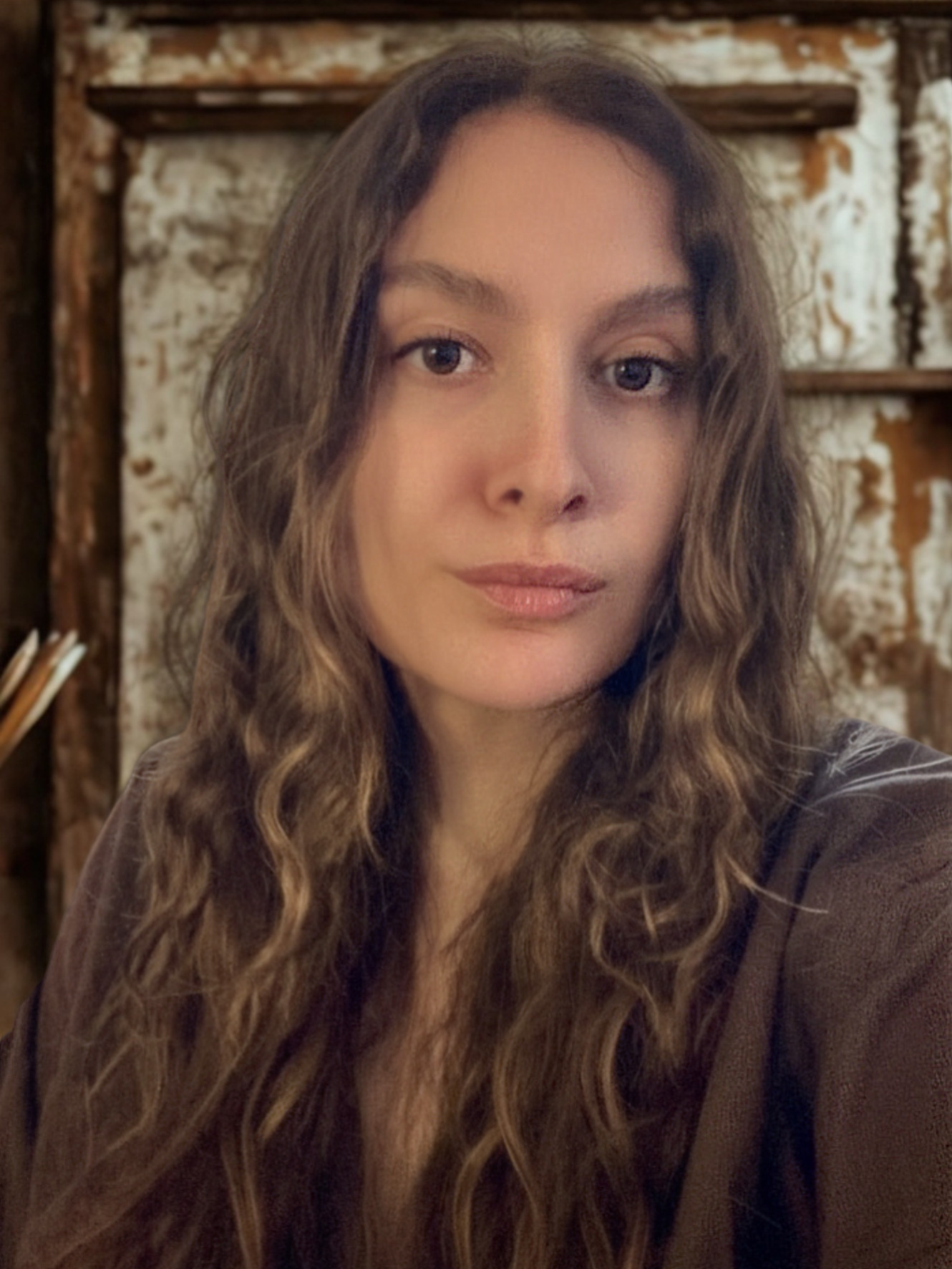
Hello, I’m Karen Robins. Professional Art Therapist and Registered Psychotherapist (Qualifying) Providing Virtual Art Therapy in Guelph, Ontario
I am a Professional Art Therapist and Registered Psychotherapist (Qualifying) providing virtual art therapy to adults and children in Guelph and the surrounding area. My sessions integrate creativity, trauma-informed care, and nervous system awareness in a way that is responsive to each person's unique experience and capacity. I believe that creativity holds genuine healing power and that lasting change happens through embodied experience and the safety of a thoughtful and collaborative therapeutic relationship. The foundation of my work is built on contemporary research in neuroscience, attachment, and trauma, grounded in the understanding that the brain and body have an innate capacity for healing when properly supported. Art therapy can help you access that capacity and connect to your creativity as something practical, empowering, and genuinely life-enhancing.