Art Therapy Mississauga ON | Creative Healing
If you've been searching for art therapy in Mississauga, you may already sense that something more than talk therapy is needed right now.
Many of the people who reach out to me feel stuck. They want something that reaches beyond understanding — that actually shifts how they feel in their daily life, not just how they make sense of their experience.
I offer virtual art therapy in Mississauga for women, children, and teens who are looking for an alternative or complement to talk-based therapy. Together, we use the creative process to work through a range of experiences, including anxiety, depression, trauma, relational challenges, neurodivergence, life transitions, stress, chronic illness and pain, grief, and loss.
Whether you are in Streetsville, Port Credit, Erin Mills, or Cooksville, through virtual sessions you can access therapy from your own space, without adding another commute to your day, and invest in something that fits your life and supports meaningful change.
You're welcome to book a consultation to explore if we are a good fit.
Services:
Art Therapy
Not everything that needs attention arrives through language. Art therapy and art-making offer another way in. Through the creative process, we can access and hold experiences that explanation alone often cannot.
Sometimes the work looks like creating an image about a feeling or experience and exploring it together —getting it out of your head and onto the page so you can see it, reflect on it, and relate to it differently. Other times it can look like slowing down, connecting with your body, and noticing how different materials shift how you feel as you engage with them. Making art can help you feel more grounded, focussed, and comfortable while you talk about things. It can also make your thoughts and feelings more easy to express when they feel buried or stuck.
Sessions are held virtually, from your own space, using simple, accessible materials, at a pace that is yours.
Art Therapy for Chronic Illness and Pain Management
Living with chronic illness or persistent pain means navigating a life that does not hold still. Limits shift. Energy fluctuates. What felt manageable last week may be out of reach today. Asking you to show up to therapy with sustained focus and cognitive availability, in the middle of all of that, is often asking too much. This is frequently where our work begins — not with what you think you should be able to do, but with what is actually available right now.
Art therapy for chronic illness offers a low-demand, creative way of working. Creative expression provides a way to hold and explore emotion, process loss, and move through identity shifts without requiring explanation or productivity. Rather than working from what you cannot access, we explore what helps your system feel steadier today. What opens up a sense of inner spaciousness. What allows grief to be present without overwhelming you. There is something in the making itself — the sensory engagement, the absorption, the quiet physical focus — that research has shown can reduce how intensely pain, fatigue, and physical stress are experienced. Creating can also bring feelings of reward, joy, possibility,and fulfillment that last long after the session ends.
Art Therapy for Children
Children rarely say outright that they are struggling. What you may notice instead is big reactions, withdrawal, sensory sensitivity, or sudden shifts in behaviour that are difficult to make sense of. Children often carry stress in their bodies long before they have language for it, and when words are not yet available to carry the experience, something else has to.
In art therapy for children and adolescents, the creative process becomes that something else. We use art and play-informed approaches to support emotional regulation, self-expression, confidence building, and resilience. The focus is not only on what a child creates, but on how the act of creating itself supports the nervous system, helping children find their way back to a steadier place. Creativity becomes a resource children can carry with them, a natural and accessible way of coping with and being with whatever they are feeling. Through making, children also explore who they are, what they feel, and what they are capable of.
Complex PTSD
There may be moments when your reactions overwhelm you. An intensity that arrives without warning. A flatness that settles in when you expected to feel more. A pull to scan, to brace, to make yourself smaller in order to keep others comfortable. These responses are not random. They are the nervous system doing what it learned to do. They are part of the lived experience of Complex PTSD.
Our work together begins with establishing safety and trust. The creative process allows us to approach what has been difficult without requiring it to be named or explained before you are ready. Working with art materials offers distance, pacing, and choice. We explore what helps you feel more settled in the present, and over time, what becomes possible is a different relationship with yourself and your world — one that has more room for steadiness, curiosity, and ease.
Chronic Illness and Disability Therapy
Chronic illness and disability shape not only what the body can do, but how a person feels about themselves, their relationships, and how they make sense of who they are. For some this involves grieving what changed: the body before diagnosis, the roles and sense of self that illness or disability has interrupted, the future that no longer looks the way it once did. For others, it means navigating a world that was built around a different kind of body entirely, and holding the emotional weight of that reality often without the acknowledgment it deserves.
Therapy for chronic illness and disability draws on a range of creative modalities, offering expressive tools that can be adapted to individual preferences, comfort levels, and accessibility needs. We work with what is available on any given day — exploring what helps you feel more settled, processing what has been difficult to carry, and making space for the parts of your experience that have not yet had room to breathe or feel seen.
Support for Neurodivergent Women
There is a particular kind of exhaustion that comes from spending years trying to adapt to environments that were not built for how you think, feel, or process. You might prepare for conversations before they happen, or leave interactions needing significant recovery time. Work and other areas of life may be too much to manage. You may have been described as overly sensitive or unfeeling, when the reality is that your nervous system is taking in considerably more than most people around you are aware of. And therapy, when you have tried it, may have felt like one more environment that made you feel misunderstood.
Neurodivergent-affirming therapy starts from a different place. How your system actually functions is not something to work around here. Pacing, sensory load, structure, and clarity are part of how the work is held from the start. When language feels slippery or insufficient, the creative process offers something more concrete to work with. The format does not stay fixed while you try to fit yourself into it. It adjusts to meet you.
Anxiety & Depression
Anxiety and depression often travel together, even when they look like opposites from the outside. Some days the mind will not slow down. Other days everything feels heavy and still. The motivation that was there before seems to have gone somewhere you cannot locate. You feel numb, disconnected, or simply unable to be present or access the version of yourself that used to find things manageable.
Anxiety and depression therapy gets curious about what is happening underneath the urgency or the shutdown, not to push toward positivity or force an insight, but to help you find your way back toward flexibility and ease. Colour, texture, movement tand and form offer a way of working with your experience directly, which can be both relieving and reviving.
Therapy for Narcissistic Abuse
Some relationships leave behind more than memories. They leave behind a changed relationship with your own perception. You replay conversations looking for the moment you misread something. You question whether your reactions were reasonable. Whether you asked for too much. Whether the problem was simply you. The confidence you once had may have eroded. What remains is not straightforward. It is not only what happened but the confusion that surrounded it. The self-doubt that settled in afterward. The vigilance that now shows up in relationships where there is no actual threat to watch for.
Therapy for narcissistic abuse begins with your experience being heard and witnessed fully, without it being questioned or minimised. Through the creative process, what felt destabilising gets externalised, given a form that can be witnessed and transformed, rather than only endured from within. Slowly, we work to separate your voice from the one that undermined it, help your body remember what safety in relationship feels like, reconnect you with your agency and strenghts, and restore the most important relationship — the one with yourself.
Creative therapy
Not every reason to seek support involves acute distress. Some people arrive with something harder to name. A sense that parts of themselves have become unavailable. That something inside is underused or constricted. That daily life is being managed but not genuinely inhabited. You simply know that somewhere beneath the surface, you are not fully in touch with yourself.
In creative therapy, we open space for play and exploration. Through experimenting with different art materials and processes, we work toward reconnecting you with what feels meaningful, noticing where resistance lives, and restoring a sense of what is possible. Sessions take place virtually, from your own environment, so developing a creative practice feels authentic and sustainable. Over time, many people experience a more rich and meaningful relationship with their inner world and rediscover aspects of themselves and the world around them with renewed curiosity and appreciation.
Therapy for burnout
Burnout develops through prolonged stress, particularly in contexts where what is being asked of you consistently exceeds what you have available, where recovery is limited or nonexistent, and where the effort required to carry on has no foreseeable end. It is not simply tiredness. It is a state of physical, emotional, and cognitive depletion that accumulates over time.
Therapy for burnout does not ask you to push harder or arrive with more than you have. It starts from where you actually are: what your system can tolerate right now, what genuinely supports capacity, and how to develop a working relationship with your own limits rather than continuing to override them. Sessions take place virtually, which can support energy conservation and reduce demand on an already frayed system. Over time, many people find that something more sustainable begins to take shape. Through creative play and creative rest, an inner spaciousness and sense of vitality return.
I Serve Clients In Mississauga And Nearby Areas
I offer virtual art therapy for women and children across Mississauga. My practice integrates creative and experiential approaches with evidence-informed care to support meaningful, lasting change. If you are looking for thoughtful, embodied, person-centered therapy, you're welcome to book a free consultation to explore if we are a good fit.
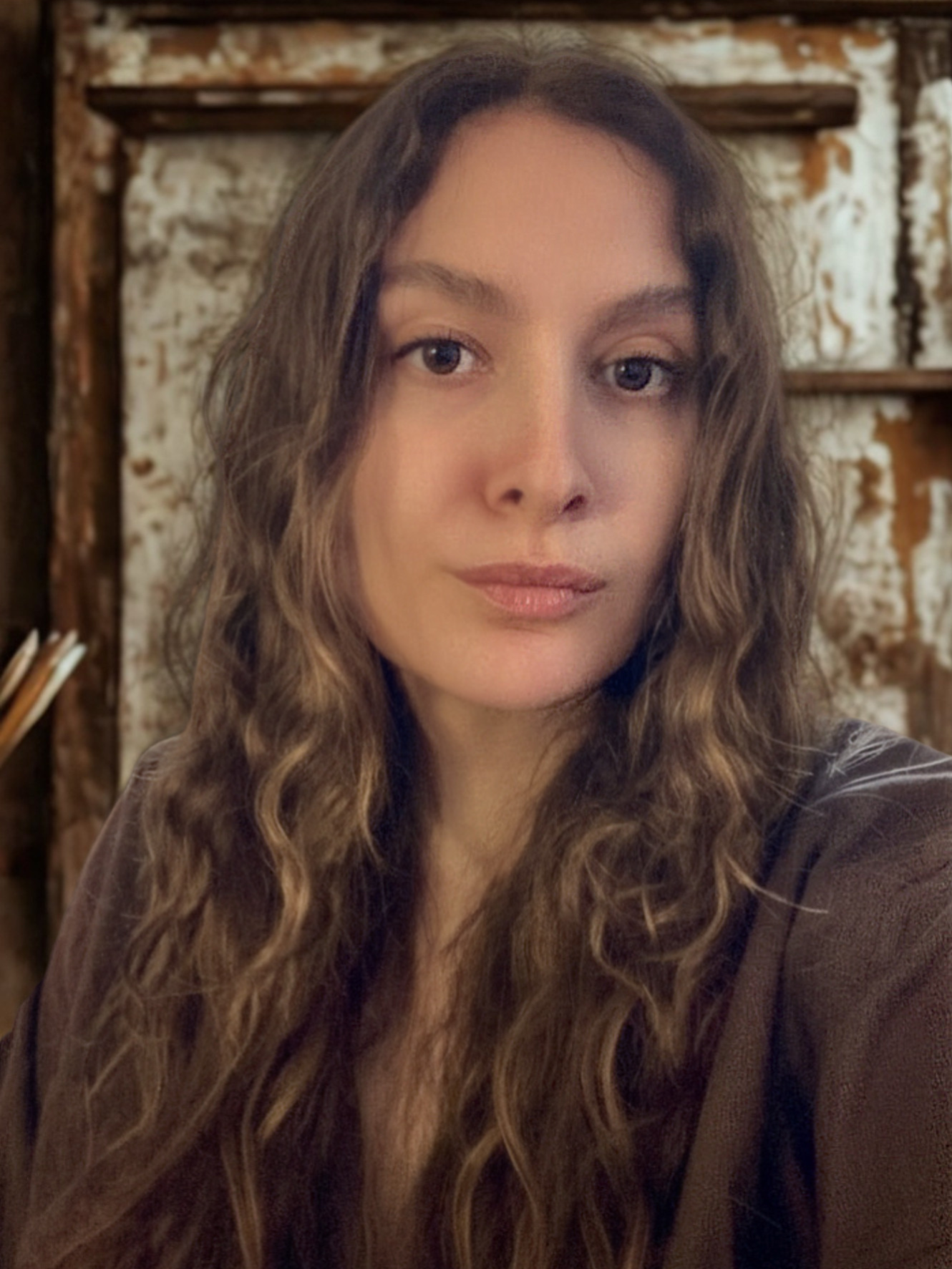
Hello, I’m Karen Robins. Professional Art Therapist and Registered Psychotherapist (Qualifying) Providing Virtual Art Therapy in Mississauga, Ontario.
I am a Professional Art Therapist and Registered Psychotherapist (Qualifying) offering virtual art therapy to adults and children in Mississauga and the surrounding area. My practice is anchored in relational, art-based, trauma-informed care. I believe deeply in the healing potential of creativity and that lasting change happens through felt experience within the safety of an attuned therapeutic relationship. My approach integrates current research in neuroscience, attachment, and trauma, with genuine respect for the brain and body's inherent widsom. My role is to help you access your creativity as a practical, empowering, and life-enhancing resource for your mental, physical and emotional wellbeing.