Art Therapy in Toronto, Ontario for adults and children
If you've been searching for art therapy in Toronto, you may already sense that something more than talk therapy is needed right now.
Many of the people who reach out to me feel stuck. They want something that reaches beyond understanding — that actually shifts how they feel in their daily life, not just how they make sense of their experience.
I offer virtual art therapy in Toronto for women, children, and teens who are looking for an alternative or complement to talk-based therapy. Together, we use the creative process to work through a range of experiences, including anxiety, depression, trauma, relational challenges, neurodivergence, life transitions, stress, chronic illness and pain, grief, and loss.
Living in Toronto often comes with a high level of stimulation and demand. Whether you are in Downtown, North York, Scarborough, or Etobicoke, it can be difficult to find space to slow down or feel settled. Through virtual sessions, you can access therapy from your own space, without adding another commute to your day, and begin to heal in a way that fits into your life and supports real change.
You're welcome to book a free consultation to explore if we are a good fit.
Services:
Art Therapy
Art therapy and art-making offer a different way into difficult experience. Rather than working only through language and explanation, the creative process opens another channel. One that can reach what words alone often can't.
One part of art therapy is exploring the meaning behind what you create, bringing into awareness what may not have been fully conscious, so it can be processed and integrated. Another part is recognising how the creative process itself is therapeutic – how different materials and ways of working with them shift your emotions, and how you feel in your body.
In practice, this might mean externalising something overwhelming so it can be witnessed from a distance. It might mean finding in texture, movement, or colour a way of settling or expressing what words haven't been able to. Or it might mean using the creative process to explore who you are, what you need, and what is wanting to change.
Art Therapy for Chronic Illness and Pain Management
When your body sets limits you didn't choose and can't always predict, everything requires negotiation. Energy fluctuates. Pain interrupts. Capacity shifts without warning. You may find that traditional therapy asks for a level of cognitive effort you no longer have available. This is often where our work begins, not by pushing through, but by adjusting to what is possible.
In art therapy for chronic illness, creativity functions as a low-demand source of support. We work with materials as a way to navigate emotion, acknowledge loss, and process identity shifts without requiring performance or productivity. Rather than asking you to explain everything, we explore what helps you feel steadier today. What creates a sense of inner spaciousness. What allows grief to exist without overwhelming you, and what helps your quality of life improve in small, meaningful ways. There is something in the act of making itself — the absorption, the sensory engagement, the quiet focus — that can ease how the body feels both during and after the creative process. Research supports this, pointing to reductions in pain perception, fatigue, and physical stress.
Art Therapy for Children
If your child is overwhelmed by emotions they cannot easily explain, you may notice big reactions, withdrawal, sensory sensitivity, or sudden shifts in behavior. Children often experience stress in their bodies before they have language for it. When words are not available, something else has to carry the experience.
In art therapy for children and adolescents, we use creativity to support emotional expression, regulation, and resilience. The focus is not only on what the artwork represents, but on how the creative process itself supports the nervous system — helping children navigate stress and find their way back to a steadier place. Creativity becomes something children can return to — a natural way of coping with and being with whatever they are feeling. Creating also gives children a way of exploring who they are — their feelings, their preferences, their sense of agency and self. Seeing something emerge from their own imagination and effort— something that didn't exist before — builds a genuine sense of confidence, capability and pride.
Complex PTSD
You may have reactions you don't fully understand. Responses that feel disproportionate, automatic, or completely out of your control. You might always be scanning for danger, experience sudden anger that surprises you, abandon your needs to keep others comfortable, or feel strangely flat and disconnected when you expected to feel something. These are some of the lived experiences of Complex PTSD.
In our work together, we begin by establishing safety and trust. Through creative process, we approach painful experiences without requiring them to be fully named or explained. Exploration of art materials allows for distance, pacing, and choice. We explore what helps you feel more stable in the present, and work through painful patterns keeping you stuck.
Healing happens through new felt experiences and the safety of the therapeutic relationship. Gradually, what becomes possible is a life met with greater curiosity, compassion, and connection toward yourself and others.
Chronic Illness and Disability Therapy
Living with chronic illness or disability shapes every dimension of life — not only physically, but emotionally, relationally, and in how we understand ourselves. For some, this means navigating the losses that come with diagnosis or disease progression — of the body you once knew, of roles and identity, of the future you had imagined. For others, it means living in a body that has always worked differently, in a world that was not built with you in mind — and carrying the emotional weight of that experience often without adequate support or acknowledgment.
Therapy for chronic illness and disability can draw on a range of creative modalities, offering expressive tools that suit individual preferences, comfort level, and accessibility needs.
Support for Neurodivergent Women
You may have spent years adapting to environments that were not built for how you process. You rehearse conversations in advance. You leave work and social interactions exhausted. You are made to feel like you are “too sensitive”, when in reality your nervous system is simply processing more information than most people realize. Traditional therapy may have felt overly verbal, abstract, or invalidating.
Neurodivergent-affirming therapy works with how your system actually functions. We pay attention to pacing, sensory load, structure, and clarity. Creative process can provide a concrete anchor when language feels slippery or overwhelming. Rather than asking you to adjust to the format, we adjust the work to support you.
Anxiety & Depression
Anxiety and depression can look very different from the outside, but often exist alongside each other.
You may wake up tired. Your mind starts running before your feet hit the floor. Small tasks feel heavier than they should. You may be functioning, meeting expectations, answering messages, and showing up, but feel internally frayed. At other times, everything feels flattened or muted. Motivation is distant and you can’t function. You might feel heavy, numb, or increasingly disconnected from yourself.
In our work together through anxiety and depression therapy, we get curious about what is going on beneath the urgency or collapse. Not to force positivity or insight, but to help your nervous system find its way back to balance. Through creative process, we use colour, texture, movement, and form to restore a sense of safety and connection.
Therapy for Narcissistic Abuse
After certain relationships, you may find yourself questioning your own perception. Conversations replay in your mind. You wonder whether you were too sensitive. Too reactive. Too demanding. Over time, your confidence in your own internal signals may have eroded.
What lingers is not only the memory of what happened, but the confusion. The self doubt. The hypervigilance in new relationships.
Therapy for narcissistic abuse begins with being heard and having your experience witnessed, without it being questioned or minimised. Through the creative process, we externalise experiences that felt destabilising and begin to separate your voice from the one that undermined it. We help your body relearn what safety feels like, and and begin to rebuild the most important relationship — the one with yourself.
Creative therapy
Not everything that needs attention arrives as a crisis. Sometimes what brings you here is subtler. A sense that something inside feels underused. Constricted. As if parts of you went offline while you focused on demands of everyday llfe. You may not be in acute distress, but something feels off or unfulfilled. You know you are not fully in touch with yourself.
In creative therapy, we create space for play and exploration. We experiment with different art materials and processes to help you reconnect with what is meaningful to you and allow new possibilities to unfold.
Therapy for burnout
Burnout is a state of physical, emotional, and cognitive exhaustion that develops through prolonged stress — particularly in contexts where demands consistently exceed available resources, recovery is limited, or the effort required to keep going has no clear end point.
Therapy for burnout offers a low-demand, embodied way to work — one that does not ask you to perform your way to recovery, explain yourself into coherence, or push harder to feel better. Instead, therapy begins with where you actually are: what your system can tolerate, what supports regulation, and how to build a working relationship with your own limits.
I Serve Clients In Toronto And Nearby Areas
I offer virtual art therapy to women and children across Toronto, supporting clients in Downtown, North York, Scarborough, Etobicoke, and nearby communities such as Mississauga and Vaughan. My practice integrates creativity and trauma-informed care to support change that extends beyond the session and into your daily life. If you’re seeking a thoughtful, collaborative, and creative therapeutic experience, this may be a place to begin.
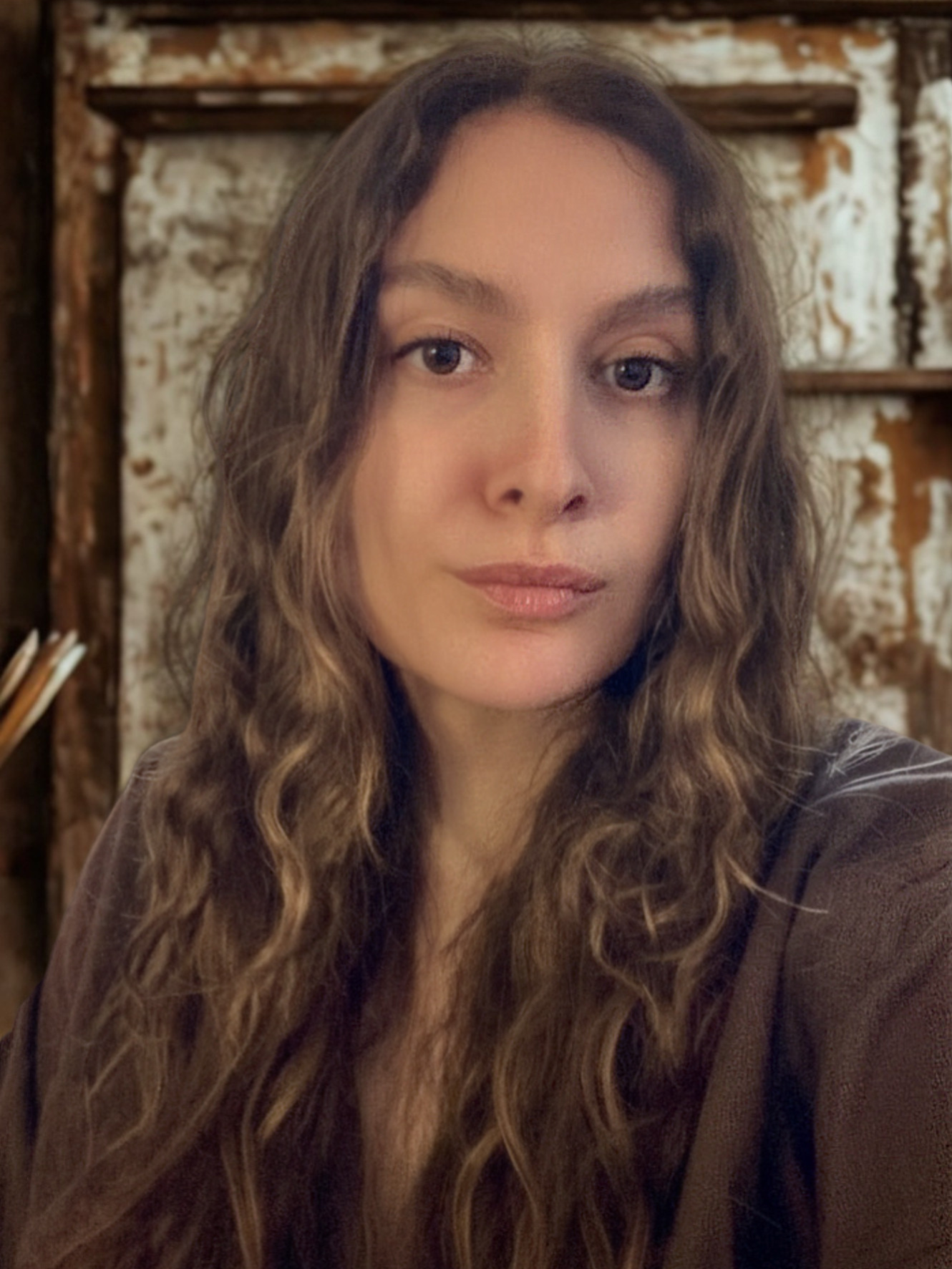
Hello, I’m Karen Robins. Professional Art Therapist and Registered Psychotherapist (Qualifying) Providing Virtual Art Therapy in Toronto, Ontario.
I am a Professional Art Therapist and Registered Psychotherapist (Qualifying) working with women and children seeking a deeper, more experiential approach to healing. I provide virtual art therapy in Toronto and across Ontario, integrating creativity, trauma-informed care, and somatically engaged practices into each session. I believe that creativity is deeply healing, and that lasting change happens through embodied experience and the safety of a collaborative therapeutic relationship. My approach is informed by contemporary research in neuroscience, attachment, and trauma, and in the understanding that the brain and body have an innate capacity for healing and change. With guided support, art therapy can help you connect to your creativity as a strength and inner resource that feels practical, empowering and life-enhancing.